by Helen Zenna Smith
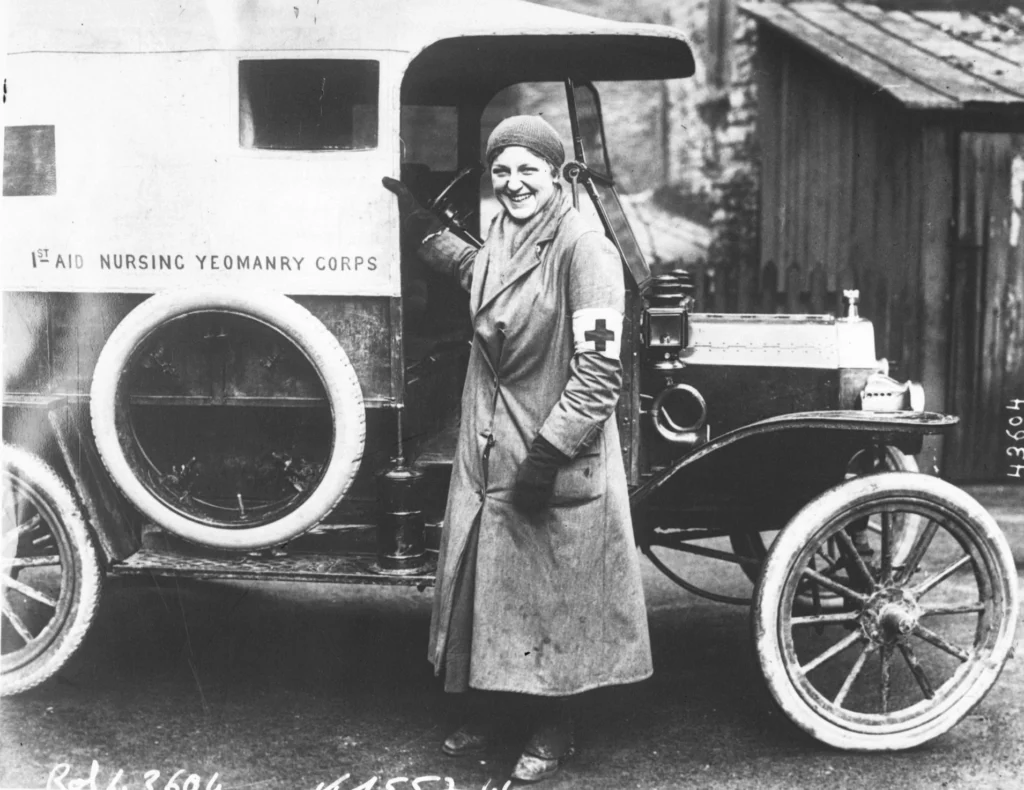
Smith’s Not So Quiet is a novel-length response to Remarque’s All Quiet on the Western Front. Whereas All Quiet on the Western Front tackles the first-person, first-hand mental effects of disability, Smith’s main character, Nellie, expresses her trauma surrounding disability as a female ambulance driver.
This trauma of constantly being forced to dissociate from her daily life leads her to instead fantasize about the men she who do not require her help. Nellie expresses her desire for “whole men” and resents and, indeed, dehumanizes the men she tends to in her ambulance.
“Oh, the beauty of men who are whole, who have straight arms and legs, whose bodies are not cruelly gashed and torn by shrapnel, whose eyes are not horror-filled, whose faces are smooth and shapely, whose mouths smile instead of grinning painfully…”
Smith, 163
When Nellie learns of another driver who is in a relationship with a disabled soldier, she mocks the soldier, claiming that the driver’s life with this man will be like continually reliving trauma. Nellie believes that the literal bodies of able-bodied men will cure her of her trauma from the war.
“She will never be able to forget these days and nights of war and horror. All her life she will have the reminder with her in the Australian husband with one leg. Limp, limp, limp…”
Smith, 57
Nellie herself is traumatized. Readings of Not So Quiet by those more qualified than I would most certainly turn up evidence of PTSD (among dissociation, especially near the end of the novel). Her resentment of physical disability can be seen as a projection of her hatred of her own mental disability and trauma.